
Medicare Education

Medicare 101: The Basics

Understanding Medicare is the first step toward choosing coverage that fits your health needs, budget, and lifestyle. This guide explains the basics in plain language so you can compare your options with more confidence.

Couple reviewing Medicare options together

Parts A & B: The Foundation

Original Medicare is provided directly by the federal government and consists of two parts that work together to cover hospital and medical costs.

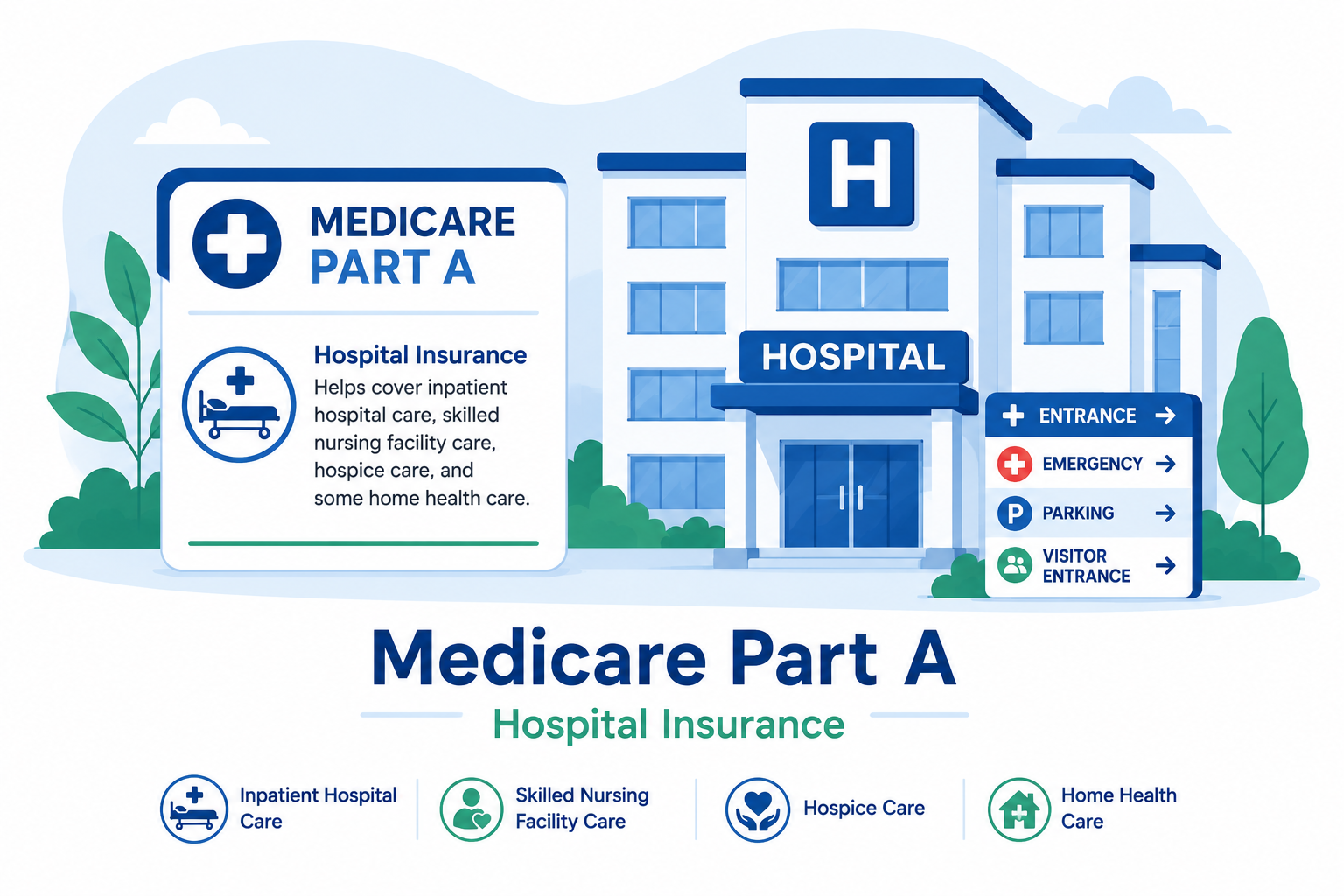
Medicare Part A — Hospital Insurance illustration
Part A — Hospital

Medicare Part A: Hospital Insurance

Inpatient care, skilled nursing, hospice & home health

Medicare Part A is often called hospital insurance. It helps cover inpatient hospital care when you are formally admitted to the hospital.

Part A can help pay for medically necessary services during your hospital stay, including your room, meals, nursing care, medications administered during your stay, lab work, X-rays, surgeries, and other hospital services.

Part A may also help cover certain care after a hospital stay, such as skilled nursing facility care, some home health care, and hospice care for people with a terminal illness.

2026 Cost Note: Most people pay $0/month in premiums for Part A. If admitted to the hospital, the Part A deductible is $1,736, plus possible cost sharing for longer stays.
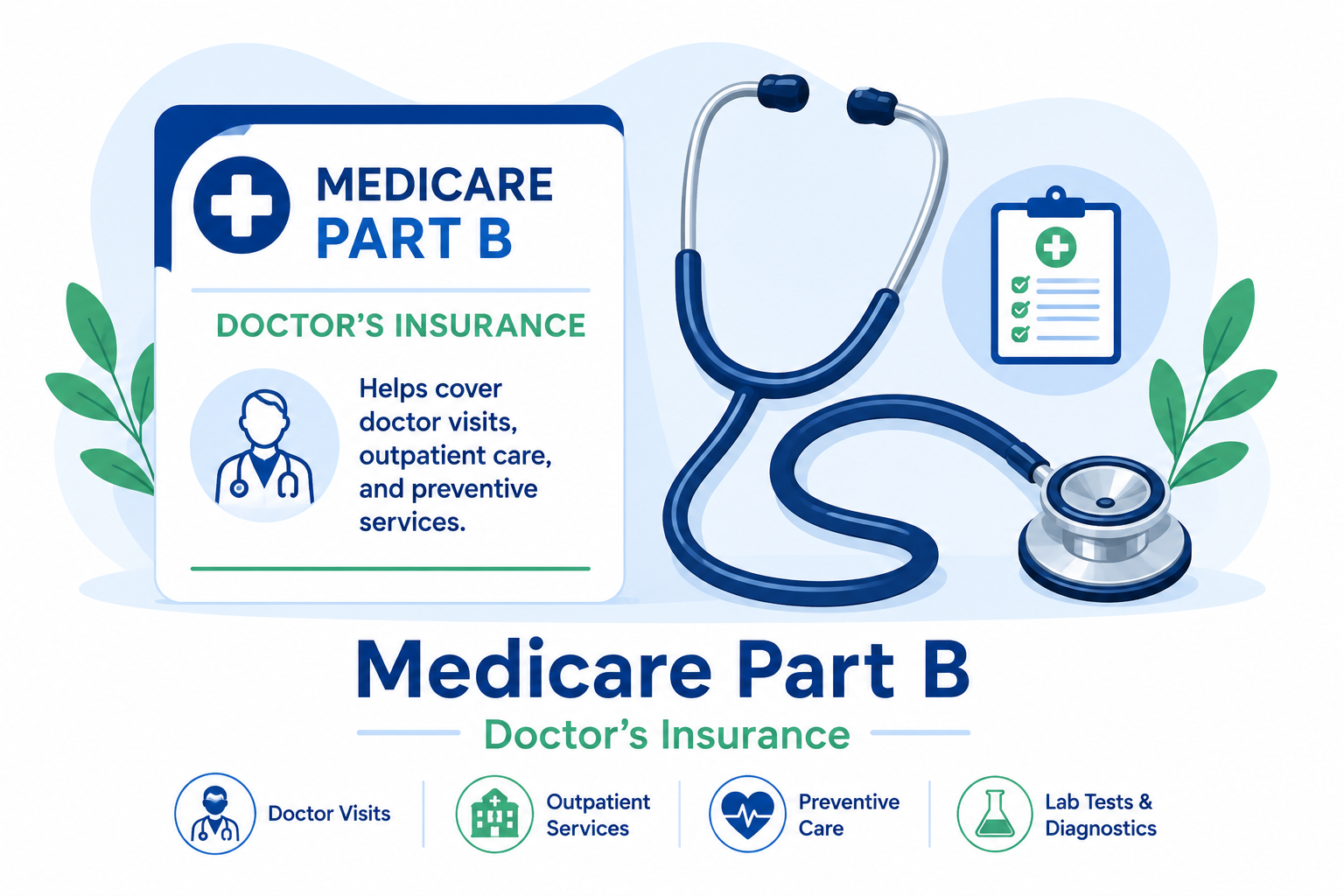
Medicare Part B — Medical Insurance illustration
Part B — Medical

Medicare Part B: Medical Insurance

Doctor visits, outpatient care & preventive services

Medicare Part B is often called medical insurance. It helps cover doctor visits and many of the outpatient services you use to stay healthy or treat medical conditions.

Part B covers services such as primary care and specialist visits, outpatient hospital care, lab tests, X-rays, preventive screenings, annual wellness visits, flu shots, and many other preventive services. It also helps pay for durable medical equipment, some home health services, ambulance transportation, emergency room care, and most physician services you receive while hospitalized.

2026 Cost Note: Most people pay a monthly premium for Part B. The annual deductible is $283. After the deductible, Medicare covers 80% of approved costs — you pay the remaining 20% unless you have a Medicare Supplement or other coverage.

Going Beyond Original Medicare

Private insurers approved by Medicare offer additional ways to expand or replace your coverage.

Part C

Medicare Advantage

An all-in-one alternative to Original Medicare offered by private insurers. Most plans bundle Parts A and B, and many include prescription drug coverage, dental, vision, and hearing benefits. You still pay your Part B premium and plan copays apply. Plans use provider networks.

Part D

Prescription Drug Plan

Helps cover the cost of prescription medications through a private insurer. A smart add-on for people with Original Medicare or a Medicare Advantage plan without drug coverage. Premiums, deductibles, and covered drugs vary by plan.

Medigap

Medicare Supplement Insurance

Sold by private insurers, Medigap plans help pay costs Original Medicare doesn't fully cover — like deductibles, copays, and coinsurance. Benefits are standardized in most states. These plans pair with Original Medicare and cannot be used with Medicare Advantage.

Medicare Advantage vs. Original Medicare + Supplement

Use this table to compare the two main paths to comprehensive Medicare coverage.

Medicare Advantage (Part C) Original Medicare + Medigap + Part D
Choice of Doctors
Doctors within the plan's approved network ✓ Any doctor who accepts Medicare — nationwide
Monthly Premium
Often $0 (but you still pay your Part B premium) Medigap premium + Part B premium + Part D premium
Out-of-Pocket Costs When You Use Care
Copays per service; yearly out-of-pocket maximum applies Lower and more predictable with a comprehensive Medigap plan
Referrals to See a Specialist
May require a referral and an in-network specialist ✓ No referral needed for any Medicare-accepting specialist
Coverage When You Travel Across the U.S.
Typically emergency care only outside your service area ✓ See any Medicare provider anywhere in the country
Prescription Drug Coverage
Most plans include it automatically Add a separate Part D plan to your coverage
Dental, Vision & Hearing
Many plans include basic extras Purchase separate supplemental plans as needed
Can the Plan Be Cancelled?
Plans can change or exit your area at year-end ✓ Cannot be cancelled while you pay premiums and made no misrepresentations
Stability of Benefits Year to Year
Benefits, copays, and networks can change each January ✓ Standardized Medigap benefits stay consistent year to year

Ready to Choose the Right Plan for You?

A licensed Medicare agent can compare every plan available in your area — at no cost to you. No obligation. You choose who contacts you.

Free service  ·  Licensed agents only  ·  Not affiliated with Medicare.gov

Frequently Asked Questions About Medicare

Medicare is a federal health insurance program primarily for people age 65 and older, as well as certain younger people with disabilities or specific conditions like End-Stage Renal Disease. It is divided into four parts—A, B, C, and D—each covering different types of care.
Medicare Part A covers inpatient hospital care, skilled nursing facility care after a qualifying hospital stay, some home health care, and hospice care. Most people do not pay a monthly premium for Part A if they or their spouse paid Medicare taxes while working.
Medicare Part B covers doctor visits, outpatient hospital services, preventive care, lab tests, X-rays, durable medical equipment, and most physician services. You pay a monthly premium for Part B, and after meeting the annual deductible ($283 in 2026), Medicare covers 80% of approved costs.
Original Medicare (Parts A and B) is provided directly by the federal government. Medicare Advantage (Part C) is offered through private insurers approved by Medicare and typically combines Parts A and B coverage, often with extras like prescription drug, dental, and vision coverage. You must still pay your Part B premium with Medicare Advantage.
A Medicare Supplement (Medigap) plan can help pay costs that Original Medicare does not fully cover, like deductibles, copays, and coinsurance. If you use Original Medicare rather than Medicare Advantage, a Medigap plan can make your out-of-pocket costs more predictable.
Your Initial Enrollment Period is a 7-month window starting 3 months before the month you turn 65. Enrolling early helps you avoid late enrollment penalties on Part B and Part D. Some people who receive Social Security benefits before 65 are enrolled automatically.
KundPro's Medicare Agent Directory lets you search by ZIP code, city, or state to find licensed Medicare agents in your area who can compare plans and help you enroll at no cost to you.